
Spray foam insulation in Hoffman Estates IL - air sealed and insulated in one step
Drafty rooms, a hot room over the garage or cold floors? Spray foam seals the gaps and insulates them in the same pass.
Is spray foam worth it for my house?
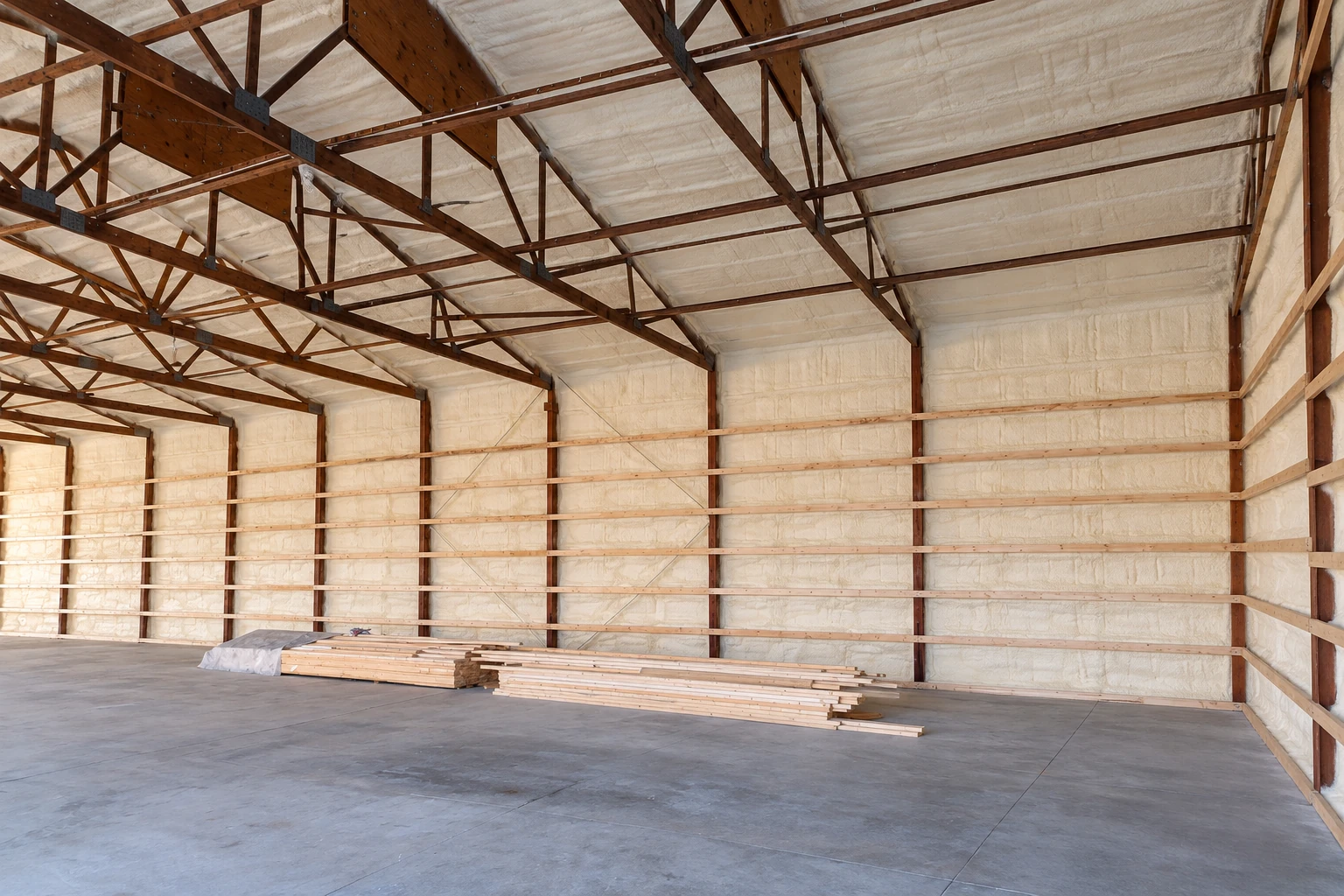
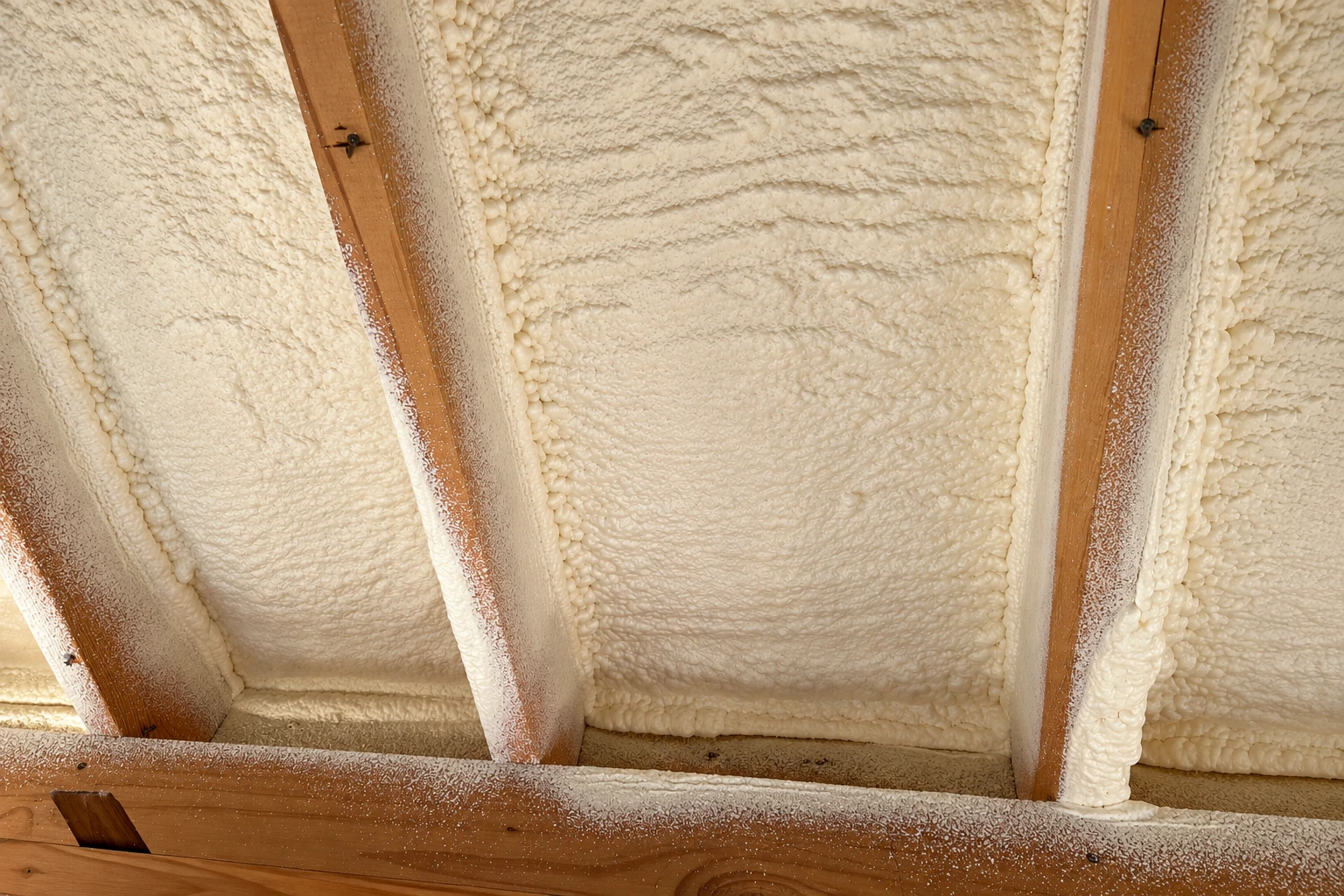
Spray foam insulation in Hoffman Estates is foam our installers spray onto rim joists, walls or the underside of the roof, where it expands into the gaps and seals air leaks while it insulates, so one step handles both the draft and the heat loss.
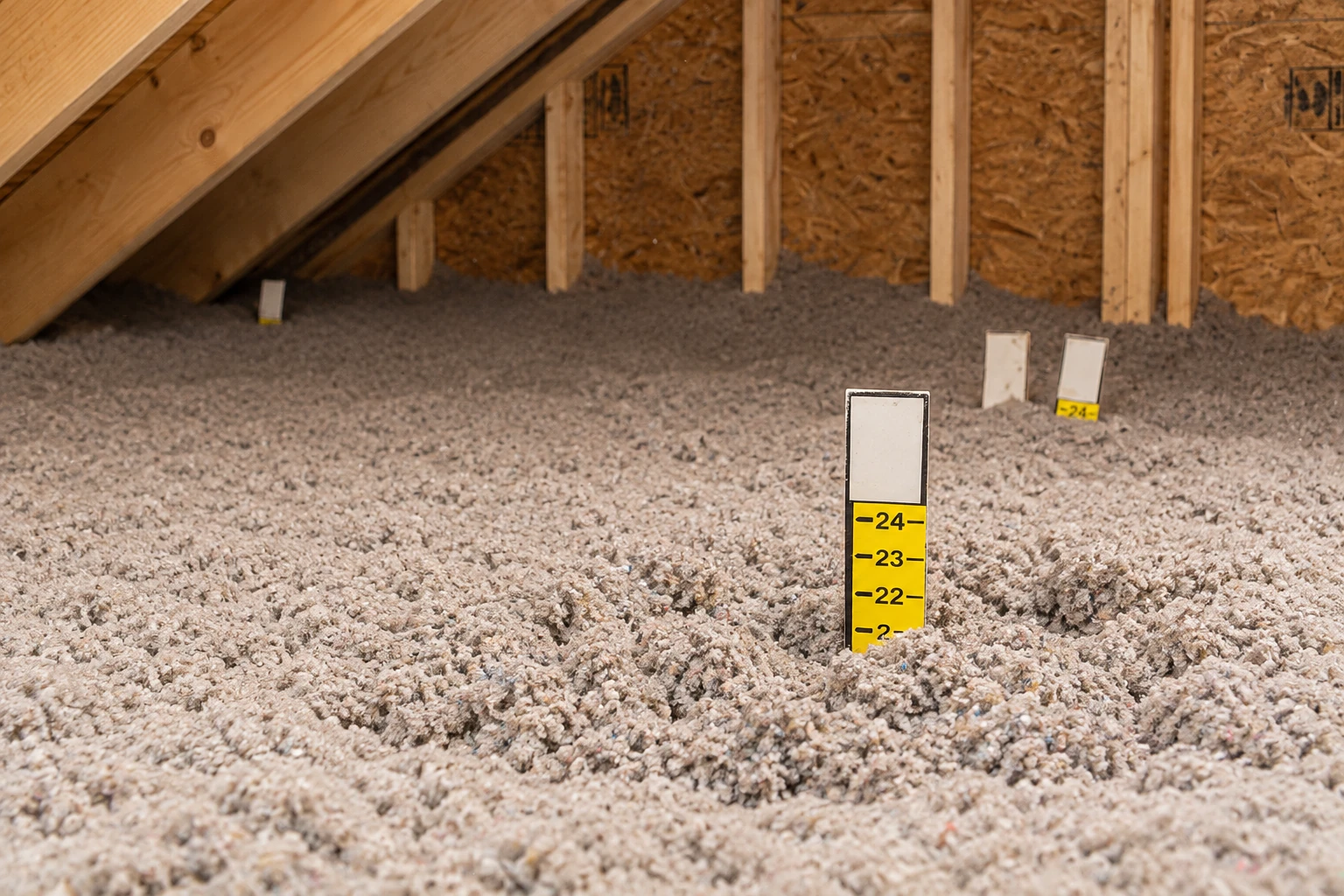
It usually starts with a room that won't stay warm, cold floors over the basement or a hot upstairs, and the real question is where the air is getting in. Foam costs more than other insulation, and in a lot of attics sealing the gaps and topping up the loose fill does the job for less, so I only point you toward foam when the spot calls for it, like rim joists, walls that are hard to open or an attic with the ductwork in it.
The price moves mostly with which foam goes in and how much area there is, then with how hard the spot is to reach and whether old insulation or a roof repair has to come first. The schedule turns on that roof check and on finding a date when everyone can be out of the house for a while. When I come out, I'll walk you through what I find and what I'd do first, and that's where your own number comes from.
- Rim joists, the band of wood sitting on your foundation, over a basement or crawl space.
- Walls and the room over the garage, where the gaps are hard to reach any other way.
- The underside of the roof deck, which pulls the attic inside the sealed part of the house.
What happens when you call us about spray foam?
I come out to look at most jobs myself, and our installers do the work. Here's how it goes, from your first call to the walk-through at the end.
Call or send us a message
Tell us what you've noticed, like a cold room or a power bill that keeps climbing, and we'll get back to you to set a time for me to come out. It helps to know how old the roof is and whether the trouble seems to be in the attic or the basement.
I look at the house myself
I go up in the attic or down in the basement or crawl space, ask what you've noticed and walk you through what I found and what I'd do first. We talk through which foam fits and what that choice does to the bill, so you know where you stand before anything goes on the calendar.
Our installers do the work
Once you've picked a date that works for your family's time away, our installers handle the work in the order we talked about. Anything that has to come first, like a roof repair or pulling out bad insulation, gets done before the foam goes in.
We go over the finished job
When the work is done and it's time to come back in, I go over the finished job with you, spot by spot. If anything raises a question for you, that's the time to ask it.
What spray foam looks like in attics and basements
These photos show the kinds of places foam usually goes, like rim joists over a basement and the underside of a roof deck. They show the trade in general, not particular houses we've worked on.
A worker in protective coveralls and a respirator sprays foam insulation onto an attic surface.
A worker in protective gear uses a wide hose to remove loose-fill insulation from an attic.
Crawl space floor covered with a white vapor barrier, with brick piers and shiny ductwork overhead.
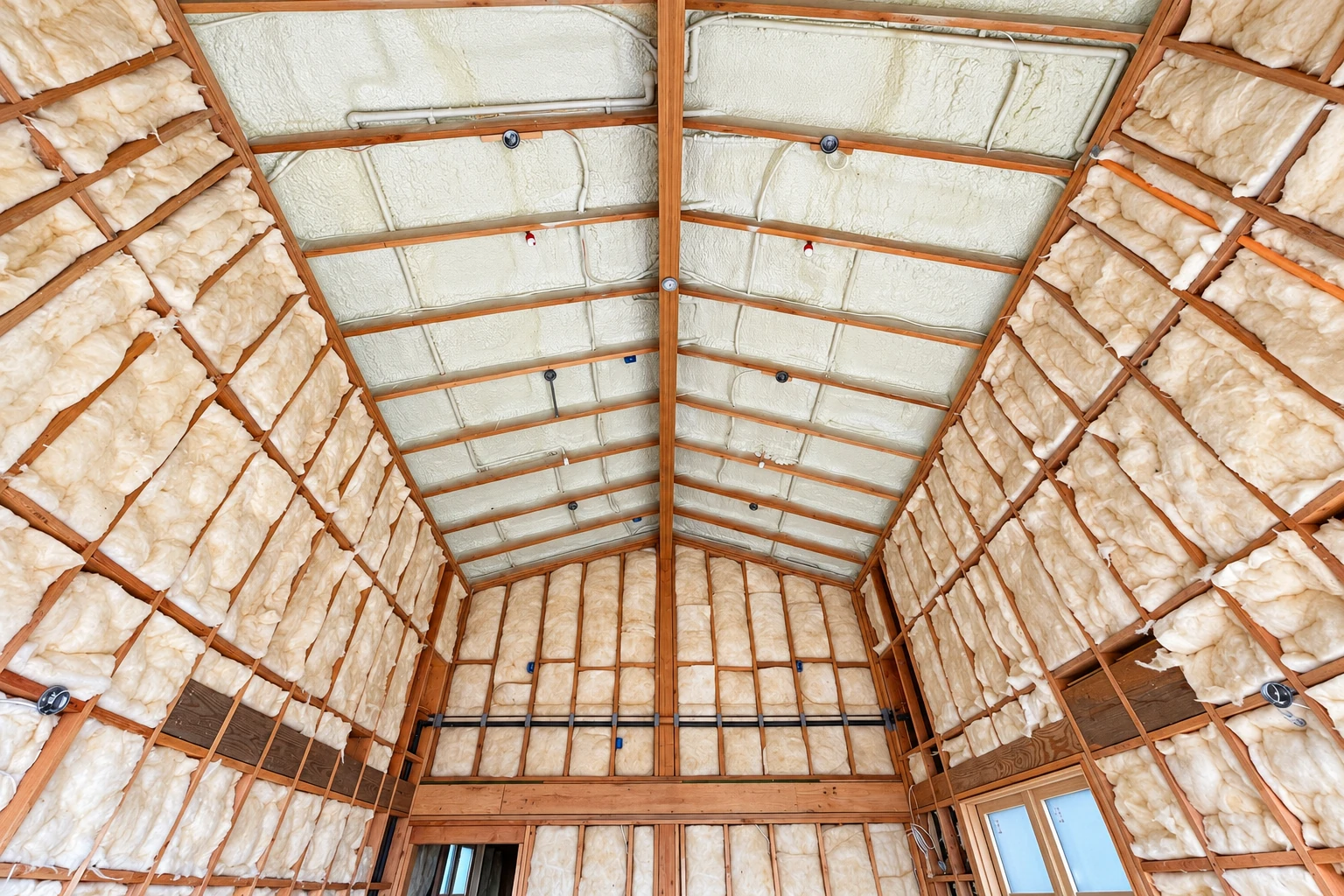
Unfinished wall cavities filled with pink fiberglass insulation between exposed wooden studs.
White spray foam coats the underside of a ceiling framed with metal channels above open arches.
Unfinished basement with white plastic-covered walls, exposed ceiling joists, ductwork, and a concrete floor.
Get a straight answer on whether spray foam fits your house
Send the form or call (847) 380-5407, and we'll reply within one business day to set up a free look at your house, with no obligation. Tell us if it's the attic or basement and how old the roof is.
(847) 380-5407Spray foam questions we hear from Hoffman Estates homeowners
These are the questions people ask most before they book foam, from the cost to how long the family stays out. If yours isn't here, ask me when I come out to look.
How much does spray foam insulation cost in Hoffman Estates?
Installed spray foam usually costs about $1 to $5 per square foot across the US, and that's what the market charges nationally, not our price. Open-cell foam sits near the low end and closed-cell near the high end, so the foam choice is the biggest lever on your bill. I'll go over what drives your number when I come out.
How long do we have to stay out of the house after spray foam?
Plan on being out for at least 24 hours, during the spraying and after it, which is what staff at the U.S. Consumer Product Safety Commission recommend. Most families line up a place to stay for everyone, kids and pets included, and we set the job date around that and go over the safety steps and the re-entry time, when it's okay to come back, before the day.
Is spray foam safe if someone in my family has asthma or allergies?
Talk it over before you choose foam, because the same federal guidance says people with skin conditions, respiratory allergies, asthma or a past reaction to isocyanates, a chemical used in the foam, should read the product information carefully. If it's a concern, another kind of insulation may be the better fit, and I'd rather point you there than sell you foam.
Is my attic a good fit for spray foam?
Your attic is usually a good fit if the roof is hard to vent, the ceiling below is hard to seal or you plan to turn the space into a room, because foam under the roof makes a sealed attic that sits inside the house. If the roof is near the end of its life, replacing it first is usually worth it so it keeps water off the foam, which is why the roof check comes before anything else.
What is the best way to insulate basement rim joists?
Spray foam is one of the usual ways, because it fills every seam where the house sits on the foundation and stops the air there, which helps close the air barrier, the layer that keeps outside air out, around the whole house. Batts pushed into those spots tend to leave gaps that let cold air slip in behind them.
How do I check that an insulation contractor can work in Hoffman Estates?
The Village of Hoffman Estates requires every contractor to be registered on its online permit portal, so ask about that before you hire anyone. You can see how it works on the village's contractor registration page, and insulation work in Illinois homes also has to meet the state energy code. We're licensed and insured.
Spray foam insulation in Hoffman Estates and nearby cities
The village decides whether a foam job here needs a permit, so we check with it before every job and handle any permit it calls for. We find the same unsealed rim joists in the cities around it.