
Closed-cell foam insulation in Hoffman Estates IL - dense foam that seals out damp air
Cold floors over the basement, shallow rafters or a damp wall? We spray dense foam that insulates and seals in one pass, where it pays off.
When is closed-cell spray foam the right insulation for a Hoffman Estates home?
Closed-cell foam insulation is a dense, rigid foam we spray in place in Hoffman Estates homes, and it stops drafts, slows heat at about R-6 per inch on the R-value scale that rates how well insulation slows heat, and at a normal thickness lets almost no moisture through.
Most people don't call asking for closed-cell foam by name. They call because the floor over the basement is cold, the room over the garage is hot upstairs all summer or a cathedral ceiling has no room left for more insulation, and I'd rather find out where the cold or the damp is really coming from before we talk about any foam.
The price comes down to how much foam a spot takes, which is its area times the thickness it needs, plus how hard it is to reach and whether old insulation or a leak has to be dealt with first. The schedule turns on the same things, so the estimate is where you get your own answer, once I've actually seen the spots.
- Rim joists, the wood band sitting on top of your foundation wall, sealed and insulated together.
- Shallow rafter spaces, where a roof needs a lot of insulation in very little depth.
- Walls where moisture is a worry, including the inside face of basement and masonry walls.
What happens after you call us about closed-cell foam
I come out to look at most jobs myself, and our installers do the spraying. Here's how it goes from your first call to the last look around the finished work.
Call or send us a message
Call (847) 380-5407 or use the form, and tell us what you've noticed, like cold floors, a drafty room or damp on a basement wall. We get back to you to set a time for me to come out.
I come out and look
I go up in the attic or down in the crawl space and basement, ask what you've noticed and check for leaks or damp before anything else. Then I walk you through what I found and what I'd do first, including where foam is worth the money and where a cheaper fix does the job.
Our installers do the work
Our installers do the work in the order we talked about, so anything that has to be fixed or cleared out happens before foam goes on. You'll know ahead of time which spots get foam and which get something else.
We walk the finished job
When they're done, I go over the finished job with you spot by spot. You see what got foamed, what got sealed and what we left alone, and why.
What closed-cell spray foam looks like on the job
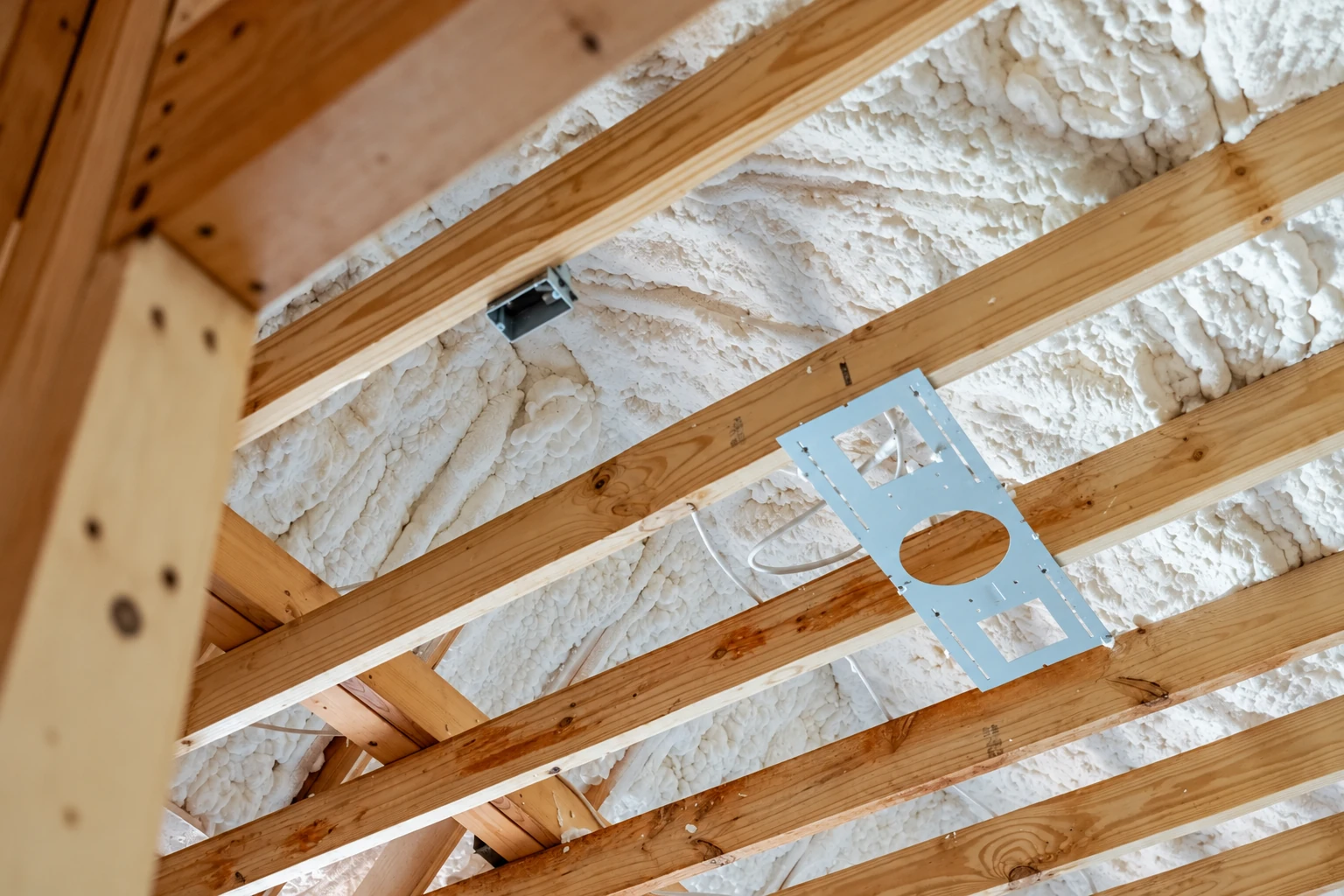
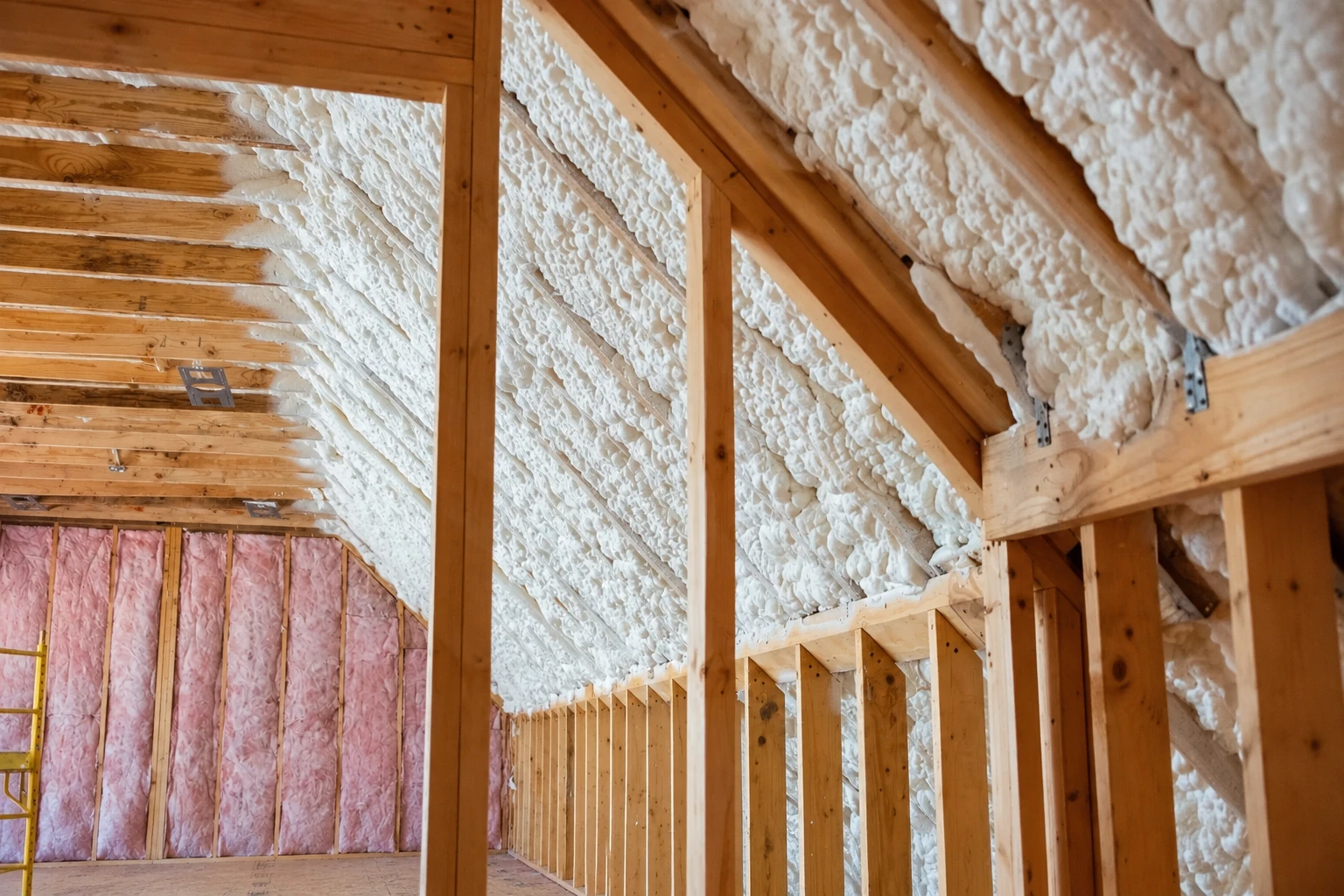
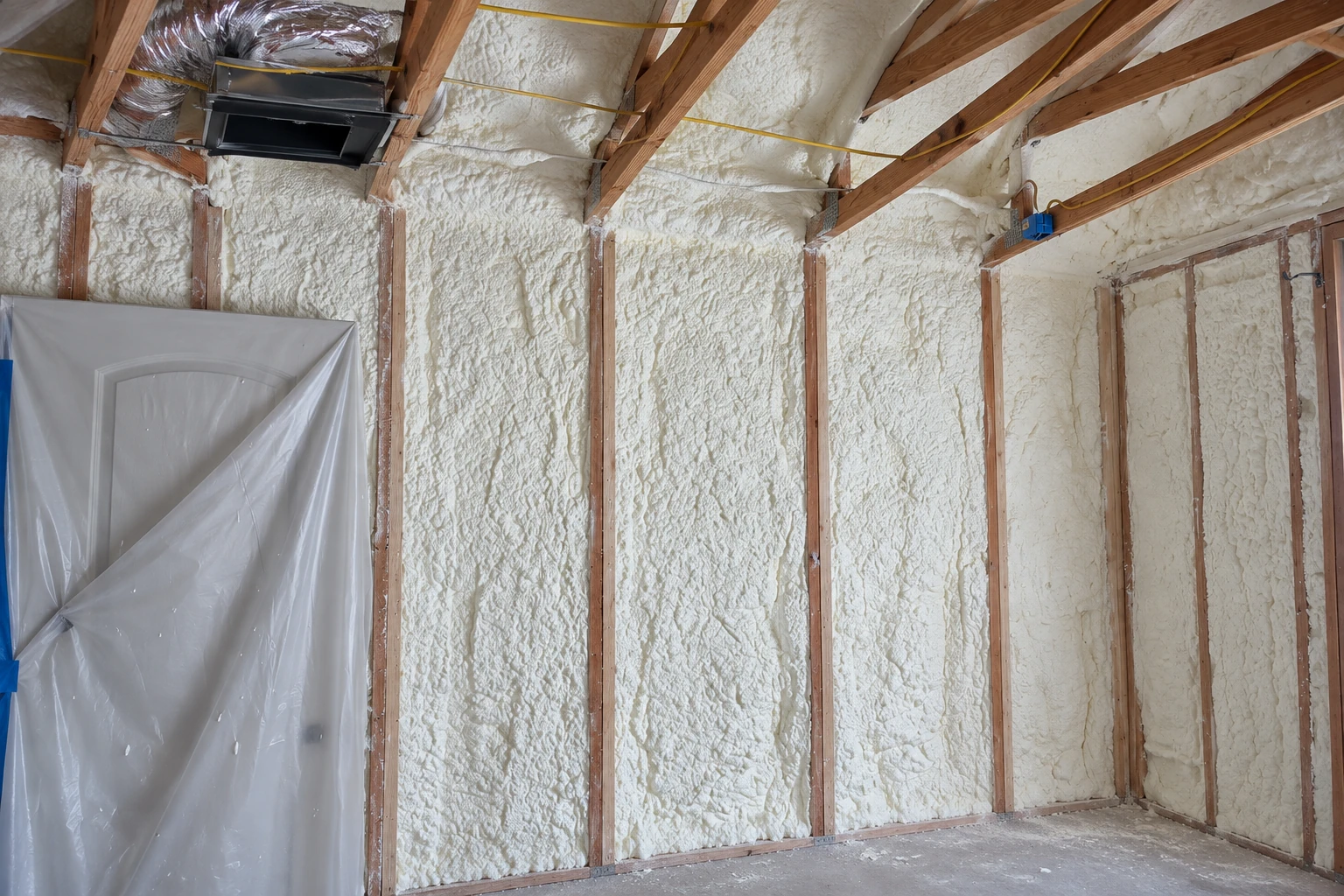
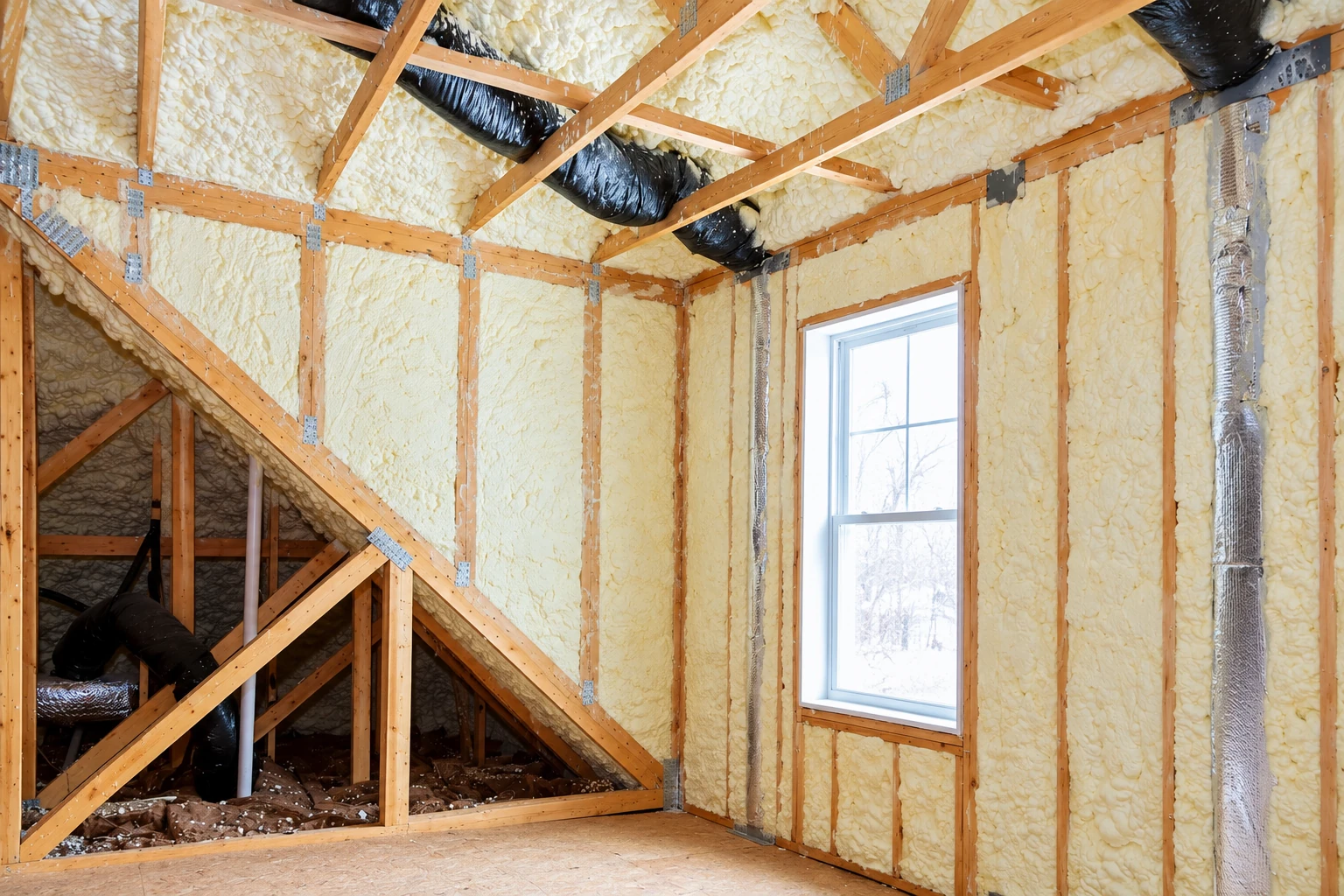
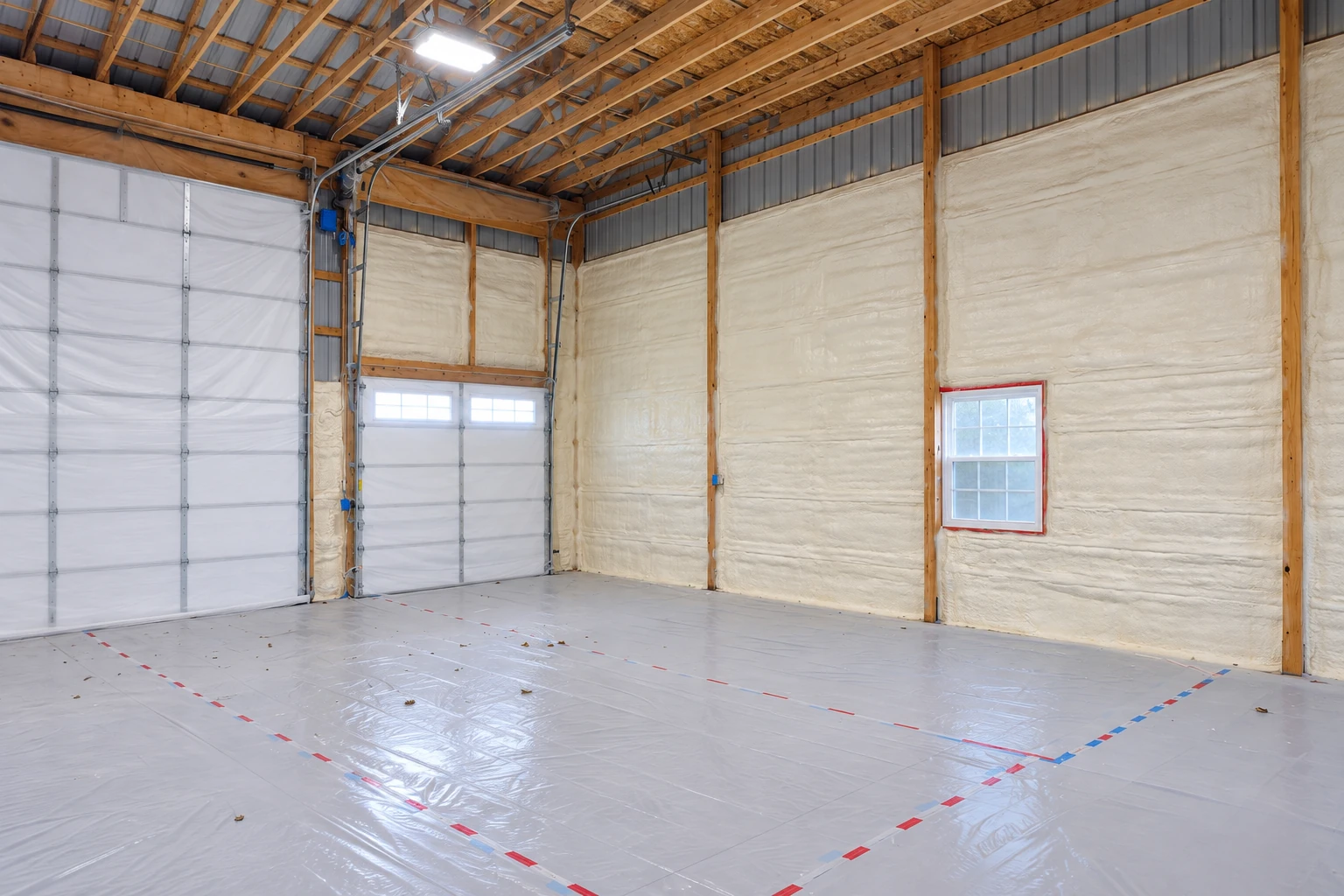
These photos show closed-cell foam the way it usually goes in, on rim joists, between rafters and against basement walls. Look for an even, firm layer that fills the space from edge to edge.
Commercial spray foam insulation coats the walls and roof of a large timber-framed building, with lumber stacked on the concrete floor.
Close-up of thick cream-colored spray foam filling the spaces between wooden attic rafters.
Loose-fill insulation covers an attic floor, with a yellow depth marker protruding from the material.
A worker in protective coveralls and a respirator sprays foam insulation onto an attic surface.
A worker in protective gear uses a wide hose to remove loose-fill insulation from an attic.
Crawl space floor covered with a white vapor barrier, with brick piers and shiny ductwork overhead.
Find out where closed-cell foam is worth it in your house
Call (847) 380-5407 or send the form and tell us which spots bother you, like rim joists, a wall or the roof. We reply within one business day to set up a free on-site look, with no obligation.
(847) 380-5407Questions about closed-cell foam in Hoffman Estates
These are the questions people ask me most before they decide on foam. If yours isn't here, ask it when I come out, since a lot of answers depend on what's actually in your house.
Is closed-cell foam worth the extra cost over open-cell?
It's worth it where you need moisture control or a lot of insulation in a tight space, and usually not anywhere else. Closed-cell costs more to install mainly because it expands less, so it takes more material to fill the same space, and you should expect it to price above open-cell on any quote for the same area. What you get for that is a rigid layer that blocks moisture and packs more insulation into each inch.
How much does closed-cell spray foam cost near Hoffman Estates?
In the Chicago area, closed-cell spray foam insulation usually costs about $1.10 to $1.60 per board foot, which is one square foot of foam one inch thick. The thicker a spot needs to be, the more board feet it takes, and tight access, prep work or old insulation that has to come out add to it. Your own number comes from the estimate, once I've seen what each spot needs.
Who handles building permits in Hoffman Estates?
The Village of Hoffman Estates Department of Development Services handles permits through its online Permitting Portal, and it takes permit questions at 847-781-2631 or buildingpermits@vohe.org. The Village decides what a foam job needs, so we check with them on each job and take care of any permit and paperwork the work calls for. The Village also requires every contractor to be registered with the Village, so ask any installer, us included, whether that registration is current, and we're licensed and insured.
Can closed-cell foam go on rim joists or masonry walls?
Yes, and those are two of the best places for it. On rim joists, spray foam air-seals and insulates in one step, and Energy Department guidance says closed-cell needs a finished thickness of at least 1.5 inches to count as an air barrier. On the inside of a brick or block wall, it adds airtightness and does an excellent job controlling condensation, and that guidance says it's work for a trained installer.
How long does closed-cell foam insulation take to install?
Thin jobs like rim joists go quickest, and thick ones take longer because the Energy Department's guidance says closed-cell beyond 2 to 3 inches has to be sprayed in layers, which adds time and labor cost. Clearing out old insulation or fixing a leak first adds to the schedule too. I'll tell you what to expect for your house at the estimate.
What is the best way to insulate a roof with shallow rafters?
Closed-cell foam is usually the best fit, because it gets the most insulation into the least depth. Energy Department research found that in colder climate zones, 6 and up, every other insulation would need well over 12 inches of space to reach the roof level those zones call for, while closed-cell fits it in a 2x10 rafter space. Foam sprayed right at the roof deck can work when the roof is airtight and indoor humidity is kept under control in winter.
Closed-cell foam insulation in Hoffman Estates and nearby cities
We're based in Hoffman Estates and spray closed-cell foam across the northwest suburbs, including Schaumburg and Palatine. Around here it's mostly basement rim joists, rooms over garages and cathedral ceilings without much rafter depth.