
Hoffman Estates Insulation ServicesHoffman Estates Insulation Services(847) 380-5407

Insulation contractor in Inverness, IL - attics sealed and filled in the right order

Hoffman Estates Insulation Services is an insulation contractor based in Hoffman Estates. In Inverness, IL, we find where heat and drafts are leaving your house, then seal and insulate attics, walls, basements and crawl spaces to stop it.

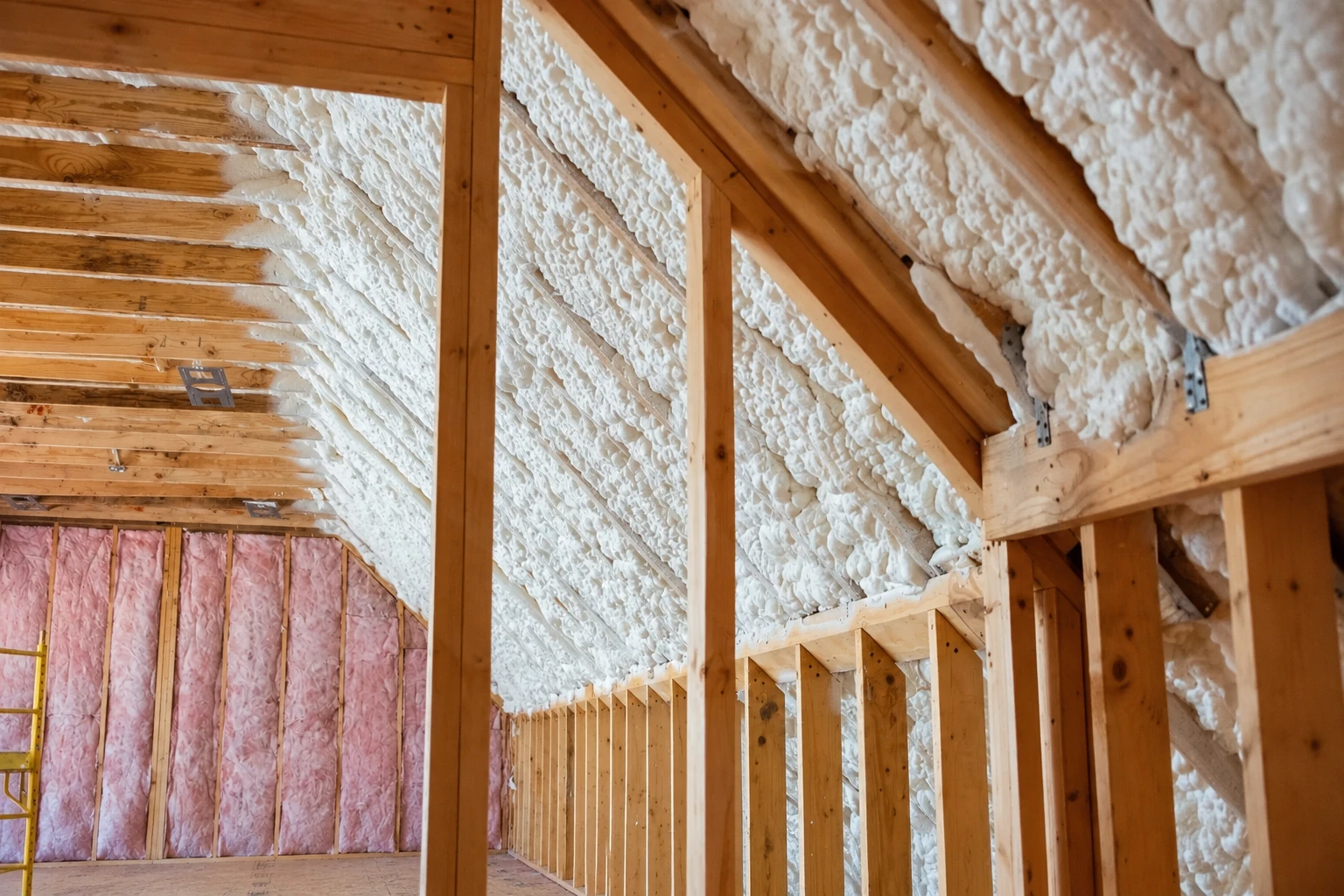
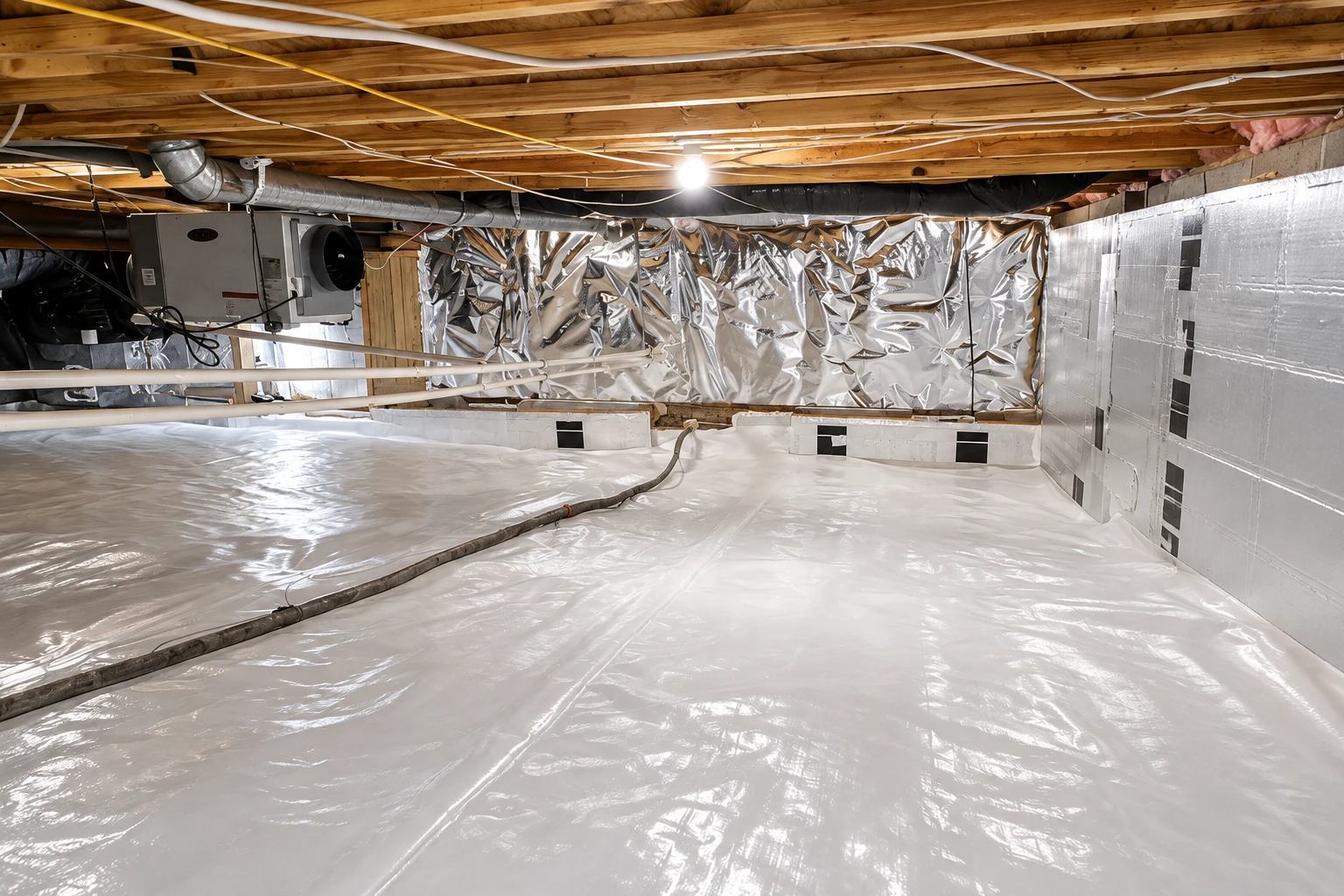
Exposed rafters and wall framing coated with white spray foam, with pink batt insulation in the far wall.

How Inverness houses shape an insulation job

Inverness is mostly houses on roomy, tree-filled lots, and many have been added onto over the years. In houses like these we look for a newer room tied into an older attic, or a room over the garage that never feels like the rest of the house. Some neighborhoods also have a homeowners association, which adds a step before any work starts.

We come over from Hoffman Estates and do the same work in Hanover Park and Barrington. Each house still gets its own look, because its age and how many times the attic's been opened up decide what we pull out first and what we lay down.

Insulation work we do on Inverness homes

Every job here starts the same way. I come out, climb into the attic or crawl space, and figure out where the heat is actually going before anyone talks about material. Sometimes that's a thin attic. Just as often it's a gap around a light, an open rim joist or old insulation that should have come out years ago. The services below cover what we find most often. On most houses we combine two or three of them, done in an order that keeps the fix from hiding a problem.

  • Spray foam insulation

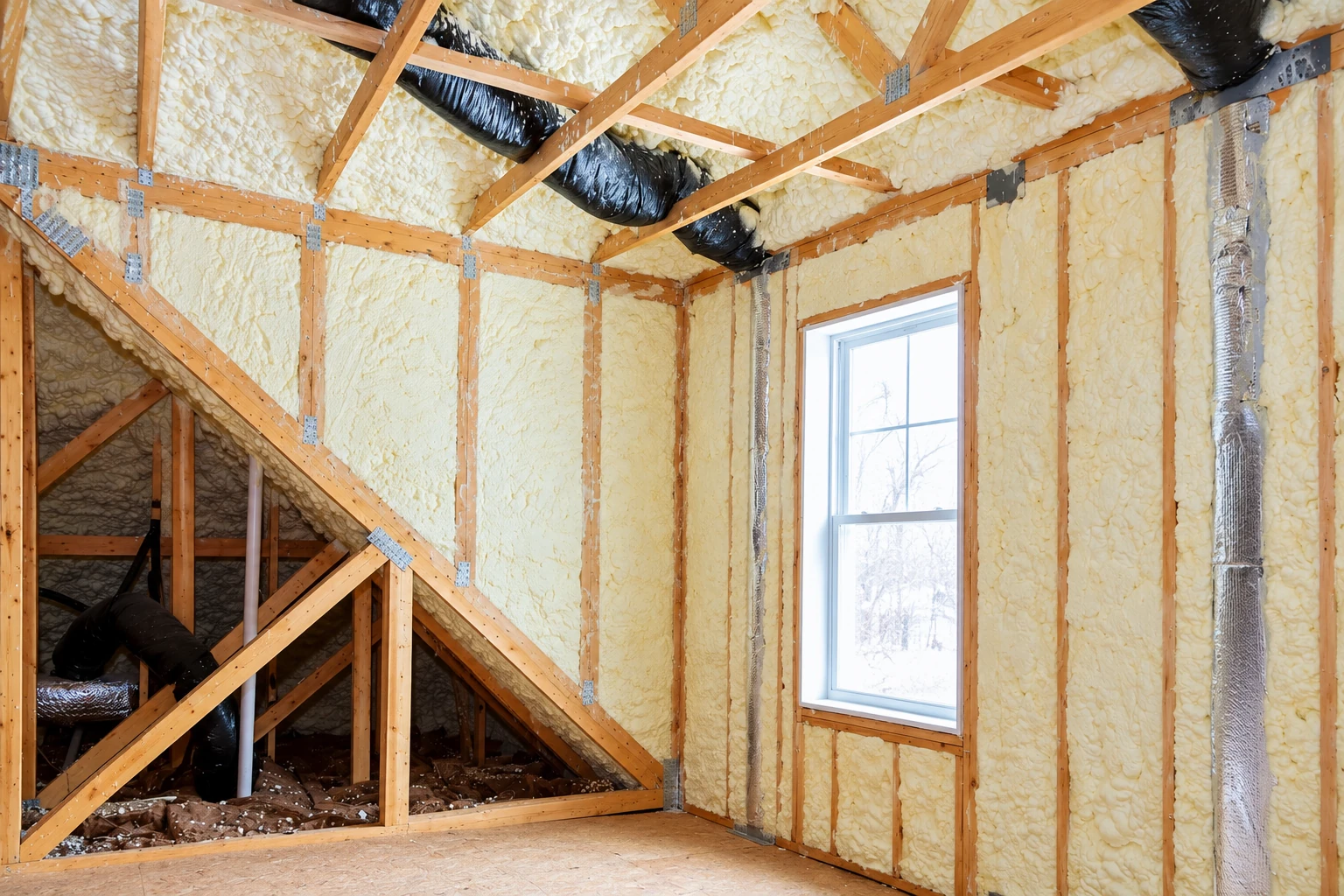
    Spray foam earns its cost where ductwork runs through the attic or a room over the garage loses heat through the framing. We'll tell you when foam is worth it and when sealing and loose fill does the same job for less.

    Explore service
  • Attic insulation

    Bigger attics here often got filled once when the house was built and have been walked through by every cable and heating crew since, so the coverage ends up flattened and patchy. We check how many inches are really up there, seal the gaps and bring it back to an even depth, edges included.

    Explore service
  • Blown-in insulation

    Blown-in insulation, loose fill sent through a hose, is how we usually top up an attic that has room to spare and a sound layer underneath. We keep it clear of the eave vents so the attic can still breathe.

    Explore service
  • Home insulation

    When the whole house feels drafty or the power bill keeps climbing, the fix is rarely one spot. We go through the attic, walls, basement and crawl space and tell you which ones matter most in your house.

    Explore service
  • Insulation removal

    Older attics can hold insulation that got soaked by a roof leak or filled with droppings, and laying fresh material on top keeps the problem in place. We vacuum it out, clean the attic floor and deal with the cause before anything new goes in.

    Explore service
  • Crawl space insulation

    Cold floors over a crawl space usually trace back to open rim joists and batts that have sagged out of place. We seal the rim and insulate in a way that stays put down there.

    Explore service
  • Wall insulation

    Walls in older sections and additions are sometimes thin or empty, which you feel as a room that's cold no matter where the thermostat sits. We check what's in the cavities first, then fill them with as little patching as the wall allows.

    Explore service
  • Air sealing services

    Air sealing, closing the gaps before insulating, matters because warm air slips out through holes around lights, pipes and wiring and takes the heat with it. We find those gaps and close them so your insulation isn't fighting a draft.

    Explore service
  • Basement insulation

    Finished and half-finished basements feel damp and chilly when the walls were left bare or framed tight against the concrete. We insulate the walls and rim joists with materials suited to a damp spot, so moisture doesn't get trapped behind drywall.

    Explore service
  • Closed-cell foam insulation

    Closed-cell foam, a dense foam that blocks moisture, is what we use on rim joists, crawl space walls and other places where damp and cold meet. It costs more than other options, so we save it for spots where it actually solves something.

    Explore service
  • Open-cell foam insulation

    Open-cell foam is softer and lighter, and it fills awkward spaces like a vaulted ceiling or the knee walls in a room over the garage. We use it inside the house where moisture isn't the worry and sealing an odd shape is.

    Explore service
  • Commercial insulation

    Offices, shops and shared buildings need insulation work planned around the people using them. We walk the building with the owner or manager first and schedule the work so the place keeps running.

    Explore service
  • Crawl space vapor barrier

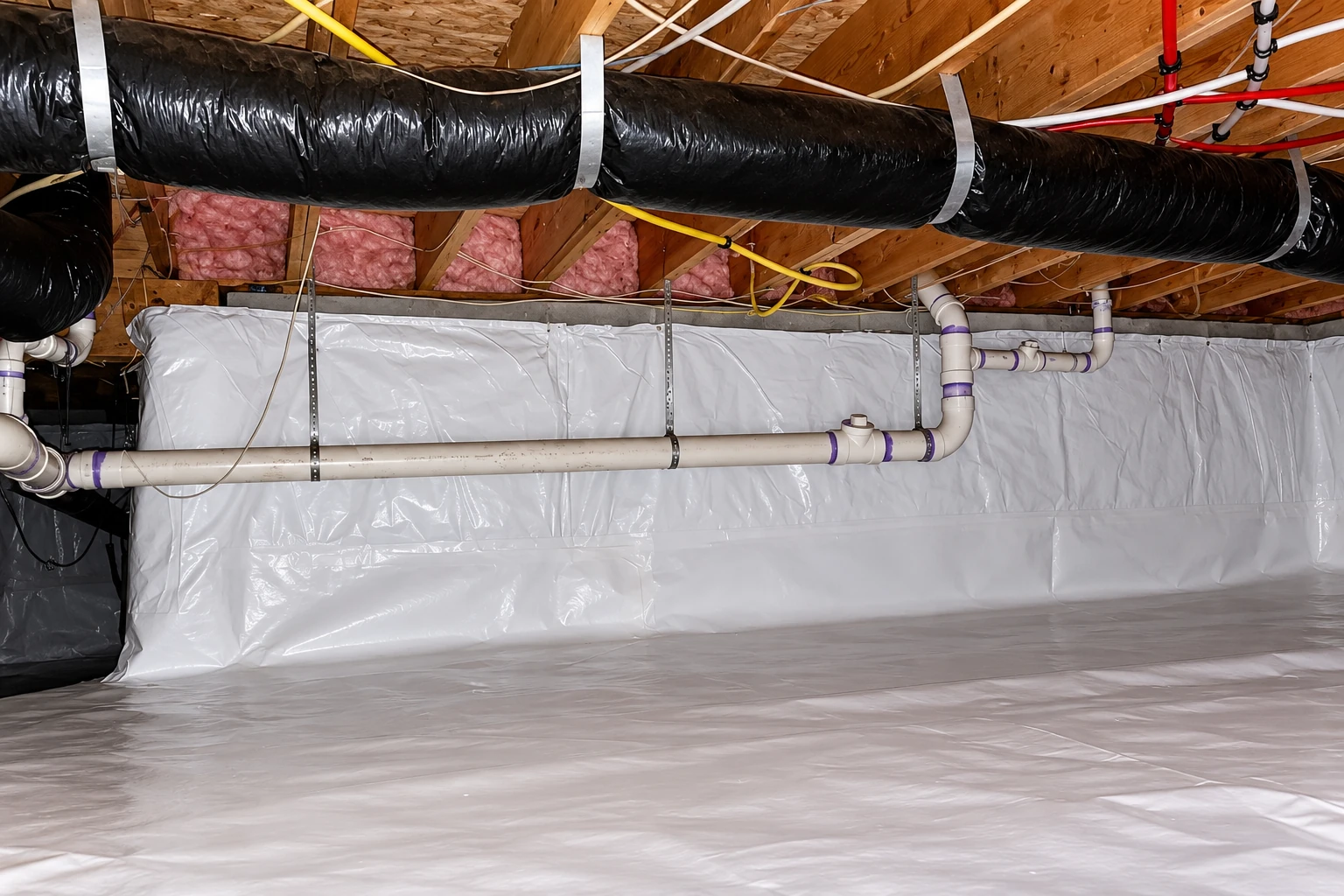
    A dirt or gravel crawl space lets ground moisture rise into the house, and a torn or missing liner won't stop it. We lay a new barrier across the floor, seal the seams and run it up the walls.

    Explore service
  • Vapor barrier installation

    Basements, crawl spaces and some walls need a vapor barrier in the right place, because one on the wrong side traps moisture instead of keeping it out. We look at how your house is built before we decide where it goes.

    Explore service
  • Attic air sealing

    Can lights, the attic hatch and the gaps around chimneys and plumbing stacks are where most air escapes from the rooms below into the attic. We seal those spots before the insulation goes back down, because covering them just hides the leak.

    Explore service
  • Retrofit insulation

    Retrofit insulation is for a house that's finished and lived in, where tearing out walls and ceilings isn't on the table. We work through the attic, the crawl space and small openings in the walls, and we patch what we open.

    Explore service

Working in Inverness: permits, contractors and what moves the price

Before a job starts in Inverness, there are a few things to sort out with the village and sometimes your association. Here's how that works, and what changes the price and the schedule.

Permits, contractor checks and the village schedule

The Inverness Building Department issues building permits for most projects in the village, so whether your insulation job needs one is its call. Submissions go in by appointment and in person, and the first plan review normally takes about ten business days. It can take longer from March to September, the busy building season, and when a permit is needed, that review usually sets the start date.

The village doesn't require contractors to hold a village license to work in Inverness, so there's no village card to ask a contractor for. That makes it worth asking any insulation contractor for proof of insurance before work starts. We check with the village office for each job and handle any permit and paperwork the work calls for, so you don't have to chase it.

  • First plan review normally runs about ten business days, longer in season.
  • No village contractor license is required to work in Inverness.
  • If an association governs your house, you'll need its approval too.

What changes the price and the schedule

Price comes down to what's already up there and what has to happen before new material goes in. A few clean inches over a sealed attic floor makes for a simple top-up. Old insulation that's soaked or full of droppings has to come out first, which adds removal and cleanup to the job before we lay anything new.

The material moves it too. Foam costs more and seals air while it insulates, but sealing the gaps and topping up loose fill usually wins unless your ductwork lives in the attic. The age of the house and how hard the attic is to reach matter as well. I'll come look, tell you what I'd do and why, and the free estimate gives you your own number.

  • Inches already in the attic, and whether that material is still clean
  • Removing wet, damaged or droppings-filled insulation before anything new goes in
  • Foam versus sealing and loose fill, and whether ducts run overhead

Get a free on-site insulation estimate for your Inverness house

We reply within one business day to set a time, and I come out to look at most Inverness jobs myself. The estimate is free, done at your house and comes with no obligation, so you can take what I tell you and decide on your own time.

(847) 380-5407

What we look for in Inverness houses

Most of what decides an insulation job is inside the house, not on paper. These are the things we check first on houses like the ones in Inverness, and why each one matters.

  • Attics opened by other trades

    Every cable, alarm and heating crew that's been through an attic leaves a trail of crushed insulation and a few open holes. On a house that's been around a while we expect that, so we check depth across the whole attic floor, not just beside the hatch.

  • Rooms over the garage

    A room over the garage loses heat from below and from the sides, and it's one of the first rooms people mention when they call. The village's building rules call out the openings between the garage and the house, so we look at that wall and ceiling before we seal anything.

  • Additions that don't match

    Where a newer wing meets the original house, the attic often changes height and the insulation stops at the old wall. Heat slips through that seam, which is why one end of the house can feel fine while the other never warms up.

  • Ductwork running through the attic

    When ducts run through the attic, they sit in the hottest and coldest air your house has. That's the one case where I'll usually point you toward foam over loose fill, because sealing around those ducts matters as much as the depth on top.

  • Thin edges and buried eave vents

    Attics often end up deep in the middle and thin at the edges, which is backward, since the edges are where the cold gets in. We set baffles, short channels that hold insulation back from the vents, so the eaves stay open and the edges get their full depth.

Why call us about your Inverness house

I learned this work in the attic, climbing up alongside installers, and started the business in 2017. Here's what that means for you when you call.

We fix what's wrong before we insulate

Insulation laid over a leak or a problem nobody checked just hides the trouble, so we work in order. First we look for roof leaks, wet or dirty material and blocked vents. Then we seal the gaps around lights, pipes, wiring and the hatch. Only after that do we add insulation, because that's the order that keeps the heat where you want it.

That order sometimes means telling you a job isn't worth doing. If your attic already has good depth and the real problem is a leaky hatch or a duct that's come apart, I'll say so. I'd rather you spend less and get the fix that works than buy insulation your house doesn't need.

  • I come look myself

    I come out to look at most jobs myself, and our installers do the work. That way the person deciding what your house needs is the one who actually climbed into your attic, not someone guessing from the driveway.

  • We handle the village permit

    We check with the Inverness village office on each job and take care of any permit and paperwork the work calls for. You won't have to book the appointment or chase the review, and we'll tell you how the timing affects your start.

  • Licensed, insured and tidy inside

    We're licensed and insured, and we're glad to show you proof before work starts. Our crew covers the floors and the path to the attic and cleans up before leaving. Your satisfaction, guaranteed.

  • Houses that don't make sense

    We're best known for the houses that don't add up at first, like the room that's cold no matter what or the attic with three kinds of old insulation in it. Call (847) 380-5407 or send the form, and we'll work it out together.

Insulation questions from Inverness homeowners

These are the questions that come up when you're planning insulation work in Inverness, from cost to the village's permit steps. If yours isn't here, call and ask.

How much does attic insulation cost in Inverness, IL?

The cost depends on how many inches you already have, whether old insulation has to come out, and whether you need foam or loose fill. Topping up a clean, sealed attic costs far less than removal, air sealing and new material together. We give you your own number at a free on-site estimate once we've seen the attic.

How do I find out if my insulation job needs a permit in Inverness?

The Inverness Building Department decides that, since it issues building permits for most projects and asks owners who aren't sure to contact the department. We check with the village for each job and handle any permit the work calls for, so you don't have to make that call yourself.

Does an insulation contractor need a license to work in Inverness?

Inverness doesn't require contractors to hold a village license to work there. The state does license certain trades, including roofing contractors and plumbers, so those licenses apply if your project grows into roof or plumbing work. For the insulation itself, ask for proof of insurance before anyone starts.

When does Inverness require stamped plans for a home project?

The building official may require plans stamped by an architect or structural engineer licensed in Illinois for any project whose construction cost may exceed $10,000.00. If insulation is part of a bigger remodel that could cross that line, we'll raise it at the estimate so it doesn't catch you late.

What do I need to apply for a building permit in Inverness?

Permit applications in Inverness need a plat of survey from a registered Illinois land surveyor, showing the lot, existing buildings, easements and setback lines. A condominium unit is exempt when all the work stays inside the existing structure. When a job needs a permit, we'll tell you what the village asks for and handle the paperwork.

How do I handle HOA approval for insulation work in Inverness?

If a homeowners association governs your property, you need its approval for the project, and the village's approval also depends on the association's rules or approval. Ask your association what it needs as soon as you decide to go ahead. We'll describe the work in plain terms so you can tell the board what's planned.

Service areas

We're based in Hoffman Estates and work across the northwest suburbs, including the cities listed here. If your house is somewhere nearby that isn't on the list, call (847) 380-5407 and ask.

Ask about your location
(847) 380-5407Get an estimate